
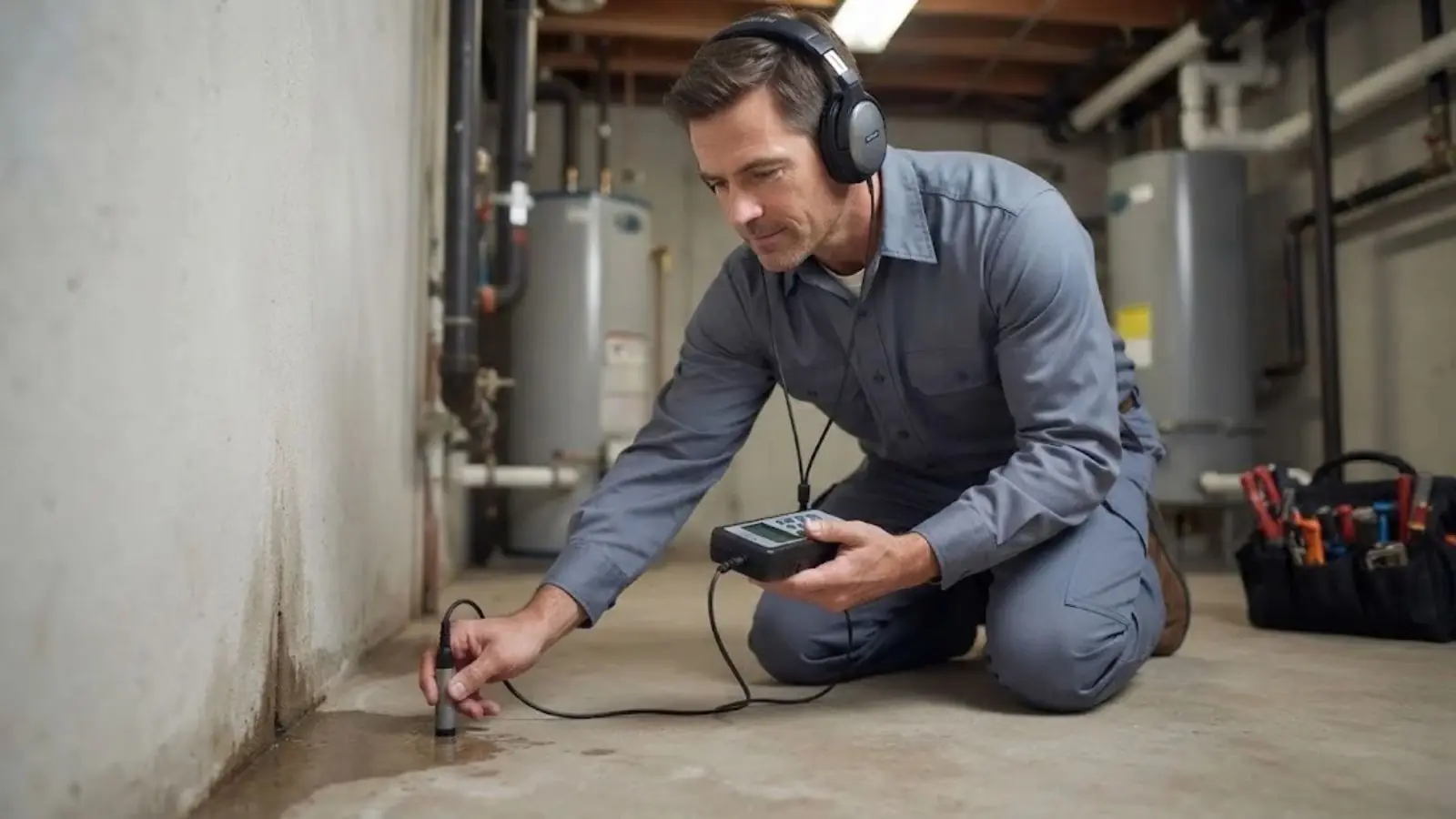
A leak that is soaking a ceiling or running behind a wall needs attention today, not next week. Our 24/7 dispatch line answers day and night, and a plumber can often arrive the same day with equipment that finds the source without tearing into finished surfaces. While you wait, shut the main water valve, move belongings away from the wet area, and stay away from outlets and fixtures that water has reached.
Leak detection means locating a leak with tools instead of guesswork. The plumber listens to pipes with acoustic sensors, scans surfaces with a thermal camera and reads moisture with a meter, then confirms the spot before anything is cut. Once the source is known, the repair may be a small patch or a full burst pipe repair.
Urgent signs.
When a leak is an emergency.
Water that is visibly flowing, a ceiling that is bulging, or a wet area near the electrical panel is an emergency. So is a water meter that keeps moving after every fixture in the house has been turned off. Slow leaks are less dramatic, but they rot framing and feed mold, and they show up first on the bill.
Meter moves with everything off.
Close every tap and appliance, then watch the meter's small leak indicator. If it keeps turning, water is escaping somewhere.
Water bill jumped without a reason.
A sudden rise in the bill with no change in how the house is used is the classic sign of a hidden leak, often a running toilet or a buried service line.
Stains, bubbling paint or musty smell.
Discoloration on a ceiling or wall, peeling paint and a damp smell point to water inside the cavity.
Wet or soft spots in the yard.
A patch of lawn that stays soggy in dry weather can sit above a leaking service line.
Think you have a hidden leak?.
Call the 24/7 line and describe the stain, the meter reading or the bill.
Detection method.
How we find a hidden water leak.
Rule out the easy sources.
We check toilets for silent flapper leaks, look at under-sink supplies and test the water heater relief valve before using tools on the walls.
.Isolate the line.
The meter and shutoffs are used to see whether the leak is on the house side or the street side of the water service.
.Listen and scan.
Acoustic sensors pick up the sound of water escaping under pressure. A thermal camera shows cool or warm patches where water has moved through a wall or floor.
.Confirm and mark.
A moisture meter confirms the wet area. The spot is marked so any opening is small and in the right place.
.
Some jobs call for pressure testing a line by capping it and watching the gauge, and some for a camera in a drain. Helium and tracer gas methods exist for hard cases, but most house leaks are found with the simpler tools above, and your plumber will tell you if something more is needed.
Local causes.
Salem homes and where leaks tend to hide.
Salem has many houses built before 1960 with supply lines that have been added to and patched over decades. Galvanized steel corrodes from the inside and fails at the threads, and older copper can pinhole where acidic water or a poor solder joint wears it down. Those leaks often start tiny and show up as a stain months later.
The water service line, the pipe from the street main to the house, is another common source. The Salem and Beverly Water Supply Board lists a separate phone line for lead service line questions on its water quality report, and the city's lines vary in age and material. If the meter shows a leak and nothing inside the house is wet, the service line is the next suspect, and water line repair is the usual fix.
Frozen pipes are a Salem-specific winter risk. A pipe that cracks in a cold wall may not leak until the thaw, so a stain that appears in March can trace back to a January freeze. Checking exterior walls and unheated basement runs after a cold snap catches this early.
Decision guide.
Leak detection or a different problem?.
| What you see | Likely source | First step |
|---|---|---|
| Ceiling stain under a bathroom. | Tub or toilet supply, drain, or wax ring. | Acoustic and moisture check on the bath. |
| Meter turning, nothing wet inside. | Buried water service line. | Meter test, then locate the line break. |
| Hot water bill up, hot tap runs long. | Hot line pinhole or recirculation fault. | Thermal scan on the hot side. |
| Wet basement wall after rain. | Groundwater, not a pipe. | Rule out supply leaks first, then see basement waterproofing. |
Common sources.
Where leaks hide, room by room.
| Area | Frequent source | How it shows up |
|---|---|---|
| Basement or crawlspace. | Corroded supply fittings, old drain joints, water heater connections. | Drips on joists, rust streaks, damp insulation. |
| Kitchen. | Supply lines under the sink, dishwasher hose, ice maker line. | Soft cabinet floor, swollen trim, musty smell. |
| Bathroom. | Shower valve, tub overflow gasket, toilet supply or wax ring. | Ceiling stain below, loose tile, spongy floor. |
| Attic or top floor. | Roof flashing leaks mistaken for plumbing, or supply lines in cold walls. | Stains after rain or after a cold snap. |
| Yard. | Service line, hose bib, irrigation line. | Soggy ground, a patch of greener grass, low pressure. |
Not every wet ceiling is a pipe. Roof and flashing leaks often look the same, and a plumber will say so after a meter test shows nothing moving. That saves you paying for the wrong repair. If the meter does move, the next step is to separate house side from street side, which narrows the search before any tool comes out.
Before cleanup.
What to document for your insurer.
- Take dated photos and video of the stain, the wet area and the meter reading.
- Write down when you first noticed it and what you did, such as closing the main.
- Keep any damaged materials that your adjuster may want to see.
- Ask your plumber for a short written note on the cause and the repair.
Policies differ on sudden versus gradual damage. A leak that has run for months is often treated differently from a burst. Keeping records from the day you notice it makes the conversation with your insurer easier, and a written cause from the plumber helps too.
Standards.
Code, permits and safety for leak detection.
Pipe repairs and replacements follow 248 CMR 10.00, the Massachusetts plumbing code. A permit and inspection may apply to larger repairs, so confirm with Salem Inspectional Services at 978-619-5641.
What to do before we arrive.
- Close the main water valve, usually near the meter, if water is flowing.
- Switch off power to wet areas only if you can reach the panel without standing in water.
- Photograph the damage before you move things, and call your insurer.
Pricing.
What leak detection costs.
Leak detection is priced to the time and tools a job needs. These factors move the price.
Homeowner insurance usually covers sudden water damage but often excludes slow leaks and the cost of finding the source, though some policies pay for access to repair. Read your policy or ask your agent. You get a clear price before work starts. For your real number, call (339) 216-9771.
FAQs.
Leak detection questions from Salem homeowners.
Yes. The line is open 24 hours a day, every day. For active water, shut the main valve first, then call so a plumber can come out the same day when available.
Turn off every faucet and appliance, then look at the meter. Most meters have a small triangle or dial that spins when water is moving. If it spins with everything off, there is a leak.
Not to find the leak. Acoustic, thermal and moisture tools narrow the spot first, so any opening is small and placed where it is needed.
Not always, but a running toilet is a common cause and a buried service line is another. A meter test and a toilet check usually sort it out quickly.
Slab leaks are more common in other regions, but slab-on-grade additions and garages exist here too. If water comes up through a floor, call right away.
Yes, including Downtown, North Salem, South Salem, Salem Neck and the Highland Avenue area, in ZIP codes 01970 and 01971, and nearby towns like Beverly.